A design choice that's forgivable in a large room can make a small one feel worse. Dark paint that reads as cosy in a big living room can read as cramped in a small one. A patterned rug that anchors a spacious layout can visually shrink a tight one. Small spaces have less margin for error, which is exactly why guessing is riskier here than anywhere else.
What actually helps a small living room
Vertical lines, not horizontal ones. Floor-to-ceiling curtains (hung close to the ceiling, not the window frame), tall narrow shelving, art hung slightly higher than feels natural, all of it pulls the eye up and makes the ceiling feel taller, which reads as "bigger" more reliably than almost anything else.
One dominant light tone, not a patchwork. A small room with three different wood tones (floor, coffee table, shelving) reads as busy. Matching or closely coordinating them reads as one continuous surface, which feels larger than the same room broken into visual chunks.
Furniture that shows its legs. A sofa or armchair on visible legs lets you see floor underneath it, which your eye reads as "more floor exists" even though the actual square footage hasn't changed. Furniture that sits flush to the ground visually eats the space beneath it.
Fewer, larger pieces over many small ones. Small rooms crammed with small furniture look cluttered even when the total volume of stuff is similar to a room with two or three bigger pieces. This is the one that's hardest to believe until you see it.
Where this goes wrong without seeing it first
All four of those are directionally true, but "directionally true" isn't the same as "true for your specific room." A pale palette that opens up a small room with a big window can look washed-out and flat in a small room with limited daylight. Vertical-line curtains only help if your ceiling height has room to exploit. The advice above is a starting point, not a guarantee, which is exactly the gap a photo-based preview closes.
See it on your actual room before deciding
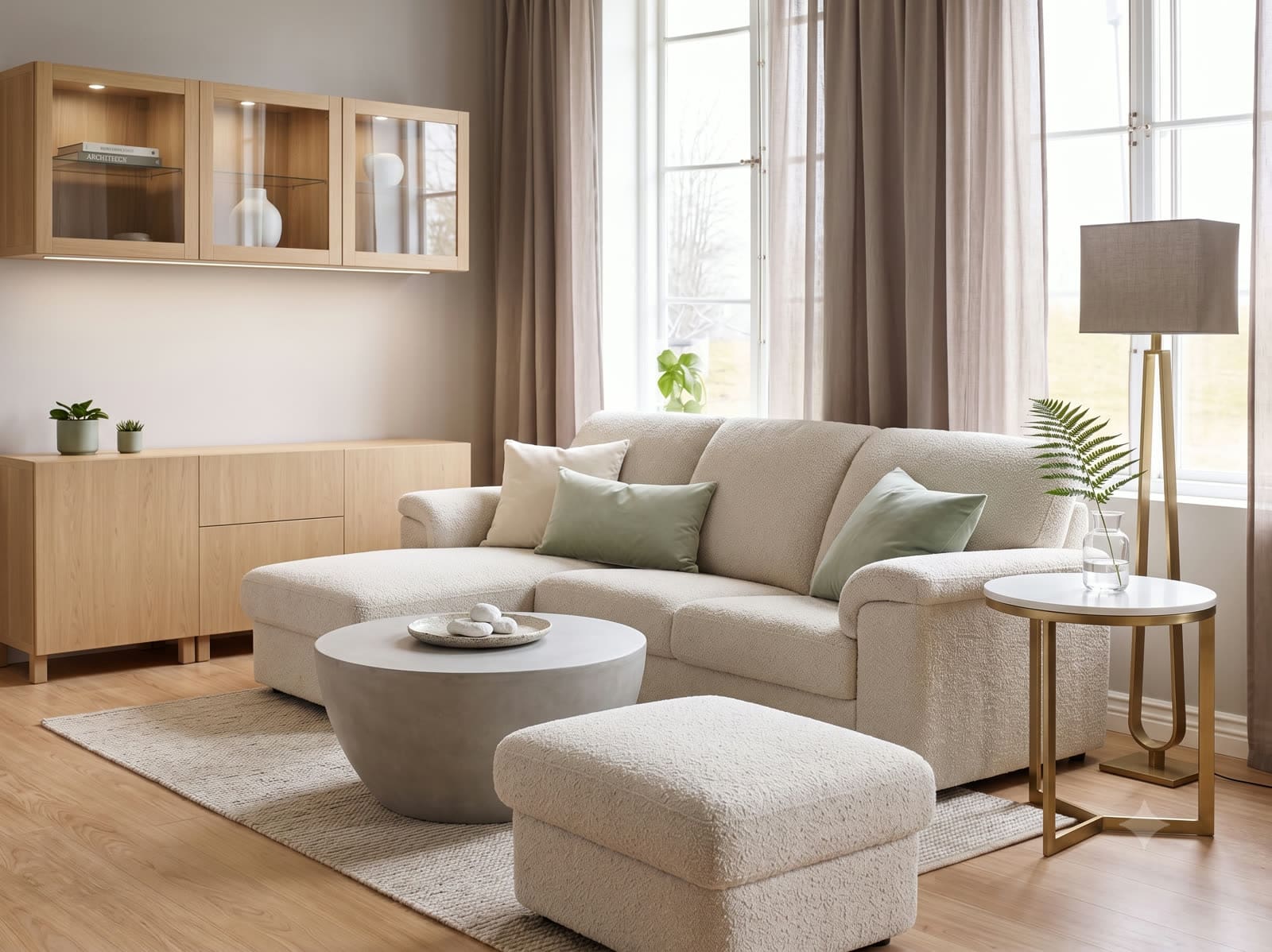
[Upload a photo of your small living room](/app/create) and try Minimal or Scandinavian, both templates lean into lighter palettes and fewer, more considered pieces, which tend to work well in tight spaces, but "tend to" is doing a lot of work in that sentence. The only way to know for certain is to see your actual walls, your actual light, your actual furniture, restyled, not a stock photo of someone else's small room that happens to work well.
It's one credit, it takes about 10 seconds, and if it doesn't work you've lost nothing you'd have spent finding out with paint instead.